
Why Your Midlife Body Is Done With “Just Coffee” Mornings(And What To Eat Instead)
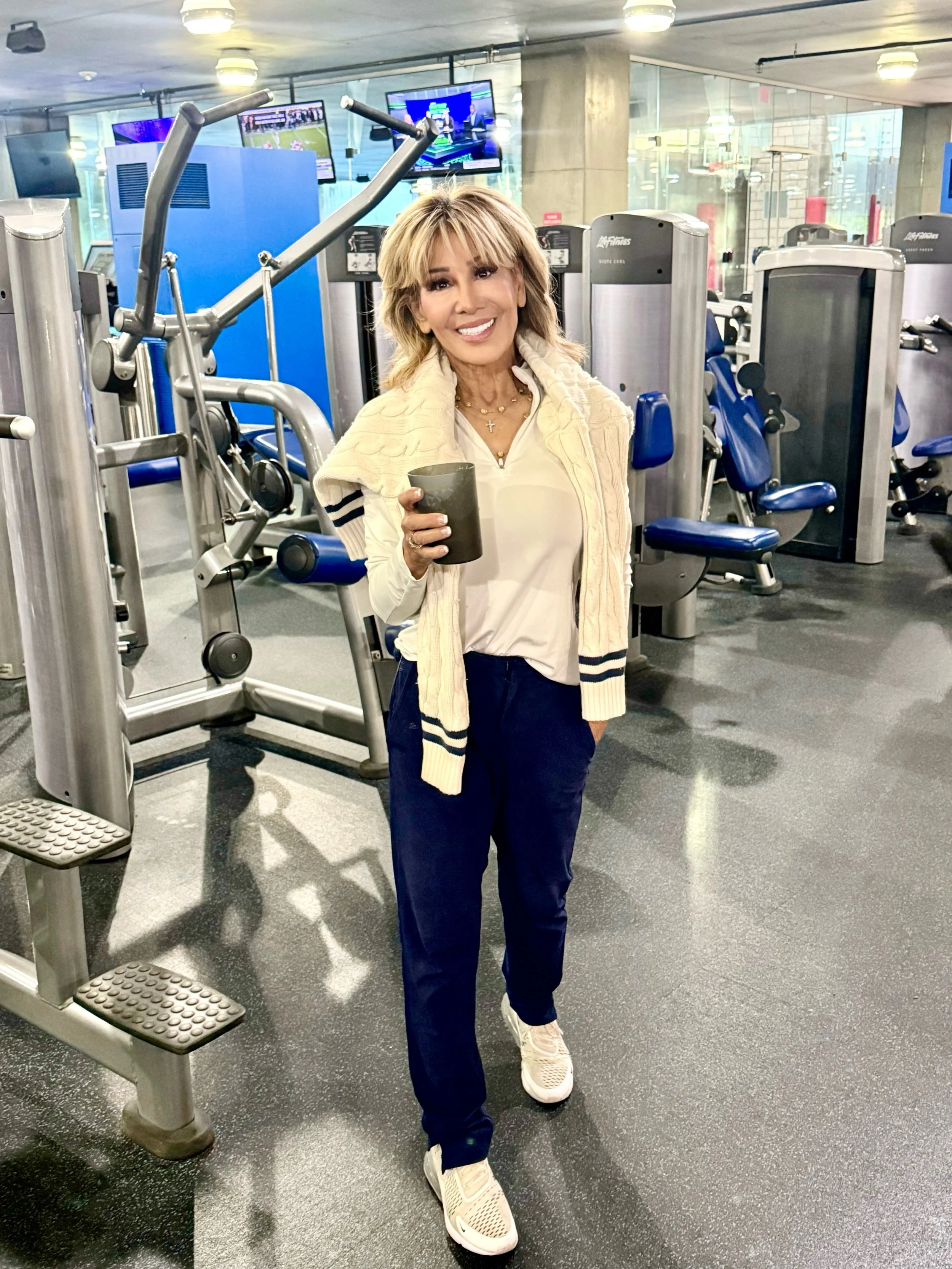
Not just coffee – 30 grams of protein to start my midlife muscles strong
I’ve been coaching women for over forty years.
Long before “biohacking” was a thing, I watched the same pattern show up in my clients’ lives:
• They’d start the day with just coffee (maybe a splash of cream).
• They’d “be good” all day, barely eating.
• Then late afternoon and evening would hit: cravings, snacking, low energy, poor sleep, and a deep sense that their body was working against them.
Back then, I didn’t have the fancy research. I just had what I could see over and over:
Coffee-only mornings make midlife women feel wired, tired, and stuck.
Now we have female-specific research from people like Dr. Stacy Sims that explains why this happens. Women’s bodies are more sensitive to under-fueling and stress hormones, especially in peri- and post-menopause. Long fasts and “just coffee” mornings are a double hit: high cortisol, low fuel.
What I’ve been teaching intuitively for decades is now backed up by the science:
• You need fuel in the morning, not a stress cocktail.
• You need enough protein, consistently, not just at dinner.
• You need fiber with your protein so your gut, hormones, and metabolism can work together.
Today I want to give you three simple shifts you can start this week:
1. A morning protein coffee that actually counts.
2. A 15-gram protein snack idea (with fiber).
3. A fiber + protein dinner formula you can rinse and repeat.
And then we’ll land on the three big habits I build into The Ageless Reset.
1. Why women need food in the morning, not just caffeine
When you wake up, your cortisol naturally rises. That’s normal. It’s your body’s way of saying, “Let’s get moving.”
But when you layer caffeine on top of an empty stomach, and stay that way for hours, your brain gets a different message:
“We’re awake, but there’s no fuel. Something’s wrong. Hold onto fat. Break down muscle. Conserve.”
That’s the opposite of what we want in midlife.
For women, especially around menopause, that pattern is linked to:
• Higher stress and anxiety
• More belly fat and less muscle
• Evening overeating and poor sleep
This is exactly what I’ve seen for decades in the real world. And this is what Dr. Stacy Sims’ work has been confirming in the lab: women do better with earlier feeding and fueling around exercise, not long, harsh fasts.
So let’s keep this simple:
In midlife, “just coffee” is not a strategy. It’s a stressor.
You don’t need a giant breakfast. You just need some protein and a bit of carbohydrate within the first 60–90 minutes of waking.
Ageless Morning Protein Coffee (≈ 30g protein)
If you love your coffee, keep it – we’re just going to upgrade it so it supports your hormones, muscles, and mood.
Ageless Morning Protein Coffee
(about 28–32 grams of protein)
• 1 cup (8–10 oz) hot brewed coffee
• ½–¾ cup high-protein milk or soy milk (aim for ~12–15g protein)
• 1 scoop of protein powder (the flavored powder I use is about 17g protein per scoop)
• Optional: cinnamon, a splash of vanilla, or a pinch of sea salt
How to:
1. In a shaker bottle or blender, mix the protein powder with the milk until smooth.
2. Pour your hot coffee into a large mug.
3. Slowly stir in the protein mixture.
4. Add cinnamon or vanilla if you like.
You’ve just turned your “just coffee” into a real meal starter with around 30 grams of protein.
Drink this before or after your morning walk or workout and notice how your energy and appetite feel the rest of the day.
2. How much protein do you actually need now?
Here’s the part most women were never told:
As we get older, our muscles become more “stubborn.” The signal that used to say “build and repair” now needs to be louder. In science, this is called anabolic resistance.
For you, it simply means:
Small amounts of protein here and there aren’t enough anymore.
You need bigger hits of protein throughout the day.
A helpful guideline for many active midlife women is:
About 0.8–1.0 grams of protein per pound of bodyweight per day.
So if you weigh:
• 150 pounds → aim for roughly 120–150 grams of protein per day.
Don’t get lost in the exact math. Think in patterns:
• 30–40g of protein at each main meal
• 10–20g at snacks
And if you’re training (which I hope you are), this becomes even more important. In my program, we always pair strength work with realistic protein goals, because muscle is the organ of longevity.
What does 15 grams of protein look like for a snack?
Here’s a snack that gives you protein and fiber in one bowl.
Berry & Seed Yogurt Cup
(≈ 15–18g protein, 5–7g fiber)
• ½ cup plain Greek yogurt (about 11g protein)
• 1 tablespoon chia seeds (≈ 2g protein, 4g fiber)
• 1 tablespoon hemp seeds (≈ 3g protein)
• ¼ cup mixed berries, fresh or frozen (2–3g fiber)
• Optional: 1 teaspoon honey or a drizzle of maple
Stir it all together:
• You’re around 15–18g protein
• You’ve added a nice hit of fiber
• It takes about two minutes to make
This is the kind of snack that stabilizes you instead of spinning you out.
3. Fiber: the quiet hormone helper
Most women are falling short on fiber. Average intake is often around 10–15g per day, when women over 50 are usually advised to aim for about 21–25g.
Fiber is one of the most underrated tools we have. It:
• Feeds your gut microbiome, which talks directly to your brain and hormones
• Helps keep blood sugar steadier, which means fewer crashes and cravings
• Supports heart and metabolic health over the long term
Here’s the easy rule I teach:
Every time you eat protein, add one “fiber friend.”
Fiber friends include:
• Fruit (berries, apples, pears)
• Vegetables (leafy greens, broccoli, Brussels sprouts)
• Beans and lentils
• Whole grains (oats, quinoa, farro)
• Nuts and seeds (chia, flax, pumpkin seeds, almonds)
If all you did for the next month was pair your protein with a fiber friend, you’d feel a difference.
Simple Dinner: One-Pan Protein + Fiber
Here’s a dinner that gives you protein, fiber, and leftovers.
Sheet-Pan Salmon, Chickpeas & Broccoli
(Serves 2–3)
• 2–3 salmon fillets (4–5 oz each) – protein + healthy fats
• 1 can chickpeas, drained and rinsed – protein + fiber
• 3–4 cups broccoli florets – fiber + micronutrients
• 1–2 tablespoons olive oil
• Salt, pepper, garlic powder, lemon wedges
How to:
1. Heat oven to 400°F (about 200°C).
2. On a sheet pan, toss chickpeas and broccoli with olive oil, salt, pepper, and garlic powder.
3. Roast for 10 minutes.
4. Pull the pan out, push the chickpeas and broccoli to the sides, and place salmon fillets in the middle.
5. Season salmon with salt, pepper, and a squeeze of lemon.
6. Roast another 10–12 minutes, until salmon flakes easily.
You’ll get:
• A high-protein dinner
• A serious dose of fiber
• Enough food for lunch tomorrow
This is the kind of “boring magic” that actually changes bodies in midlife.
Strength training: your built-in insurance policy
Nutrition sets the conditions. Strength training is what tells your body what to do with that nutrition.
Starting around age 30, we naturally lose muscle every decade if we don’t challenge it. That muscle loss affects everything: strength, balance, bone density, metabolism, confidence.
The good news? You can reverse a lot of it.
In The Ageless Reset, we anchor on:
• Strength training at least 2 times per week to start, so you can build consistency without overwhelm
• Then, when your body and schedule are ready, we often add a third strength day to deepen your results
• Simple, repeatable movements: squats, hinges, pushes, pulls, carries
• Enough protein to actually respond to the work
You do not need to live in the gym. You need a smart minimum done consistently.
Three simple actions for this week
If you only remember one thing from this blog, make it this:
Your midlife body is not “broken.” It just needs a different kind of support.
Here’s your mini-experiment for the week:
1. Replace “just coffee” with Protein Coffee.
• Within 60–90 minutes of waking, have the Ageless Morning Protein Coffee so you’re getting ~30g of protein to start your day.
2. Hit one daily protein goal.
• Pick a realistic starting point (maybe 90–120g of protein per day).
• Aim for 30–40g at each main meal and one 15–20g snack like the yogurt cup.
3. Add one fiber friend at every meal.
• Berries or chia at breakfast.
• Beans or extra greens at lunch.
• Broccoli, chickpeas, or a side salad at dinner.
Let your body show you what changes when you treat it like it’s on your team.
If you want structure, accountability, and a coach in your corner…
This is exactly what we work on inside The Ageless Reset:
• We start with at least 2 strength sessions per week, designed for midlife bodies, joints, and schedules
• As your capacity grows, we often build to a third weekly strength day
• Clear protein and fiber goals that match your weight, age, and activity
• Tracking the right numbers: movement, protein, strength, and how you actually feel
• A full year of support so this isn’t just another 6-week sprint you abandon in February
Enrollment for this first Reset cohort closes on December 31.
From the time this blog goes live, that’s 23 days.
If your body has been whispering, “I can’t keep doing it like this,” this is your sign.
👉 You can learn more and join The Ageless Reset here: www.agelessbykim.com
I believe in you and in your ability to build a better life. You are not behind. I’ve got you.
I honor your soul,
Kim